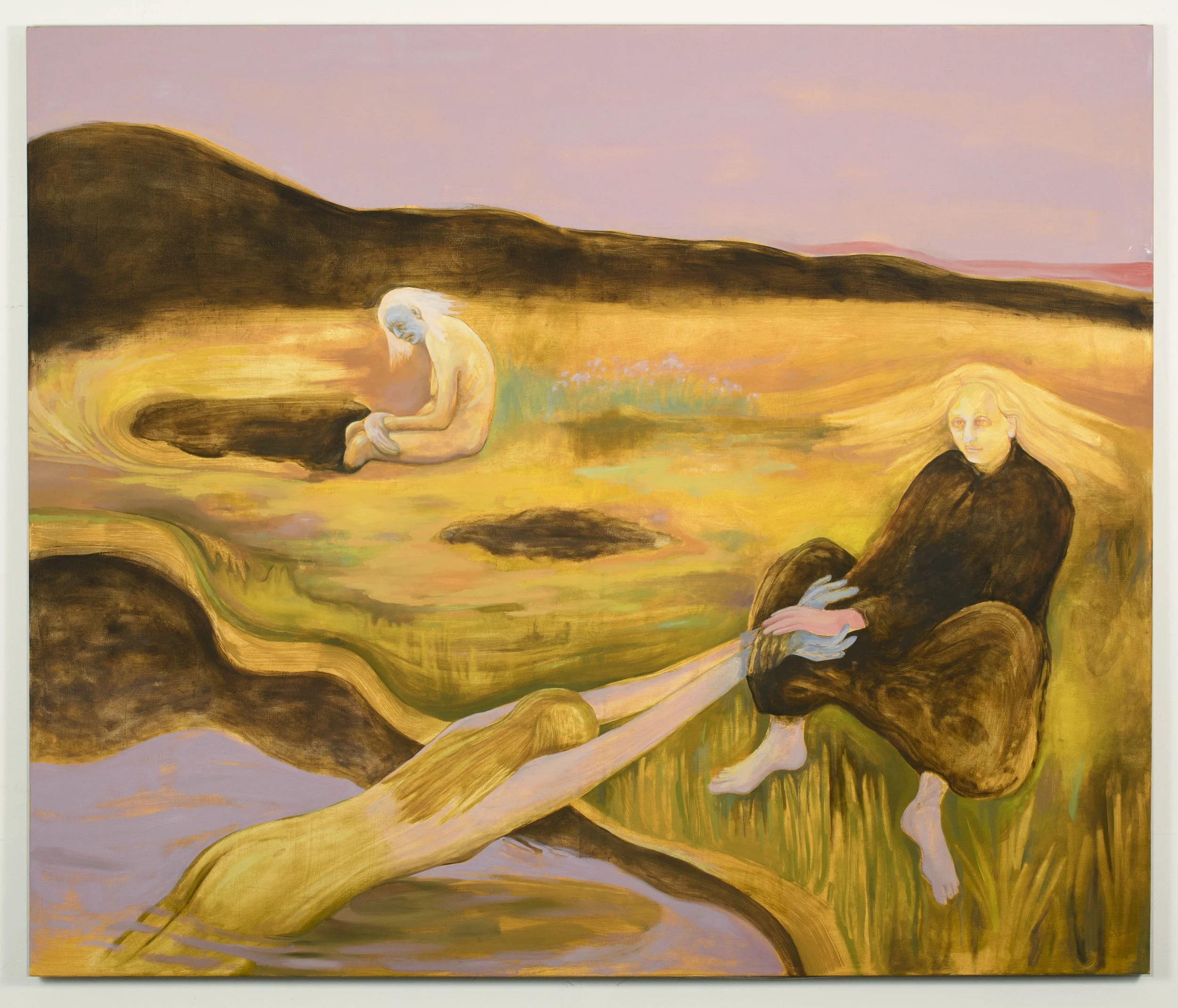
Pulled Out From the Break-Stream. 64" x 73". Oil on Linen. 2025
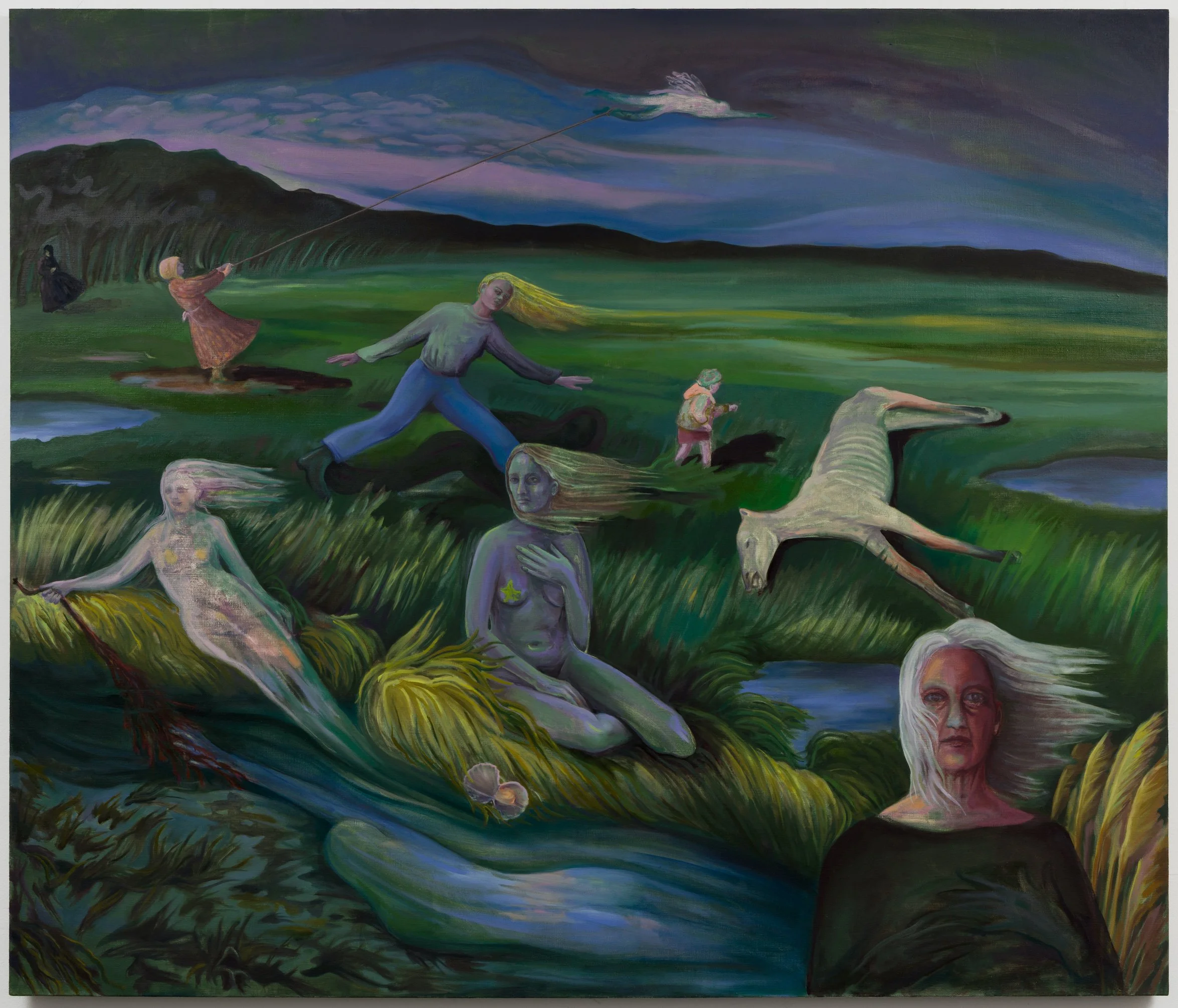
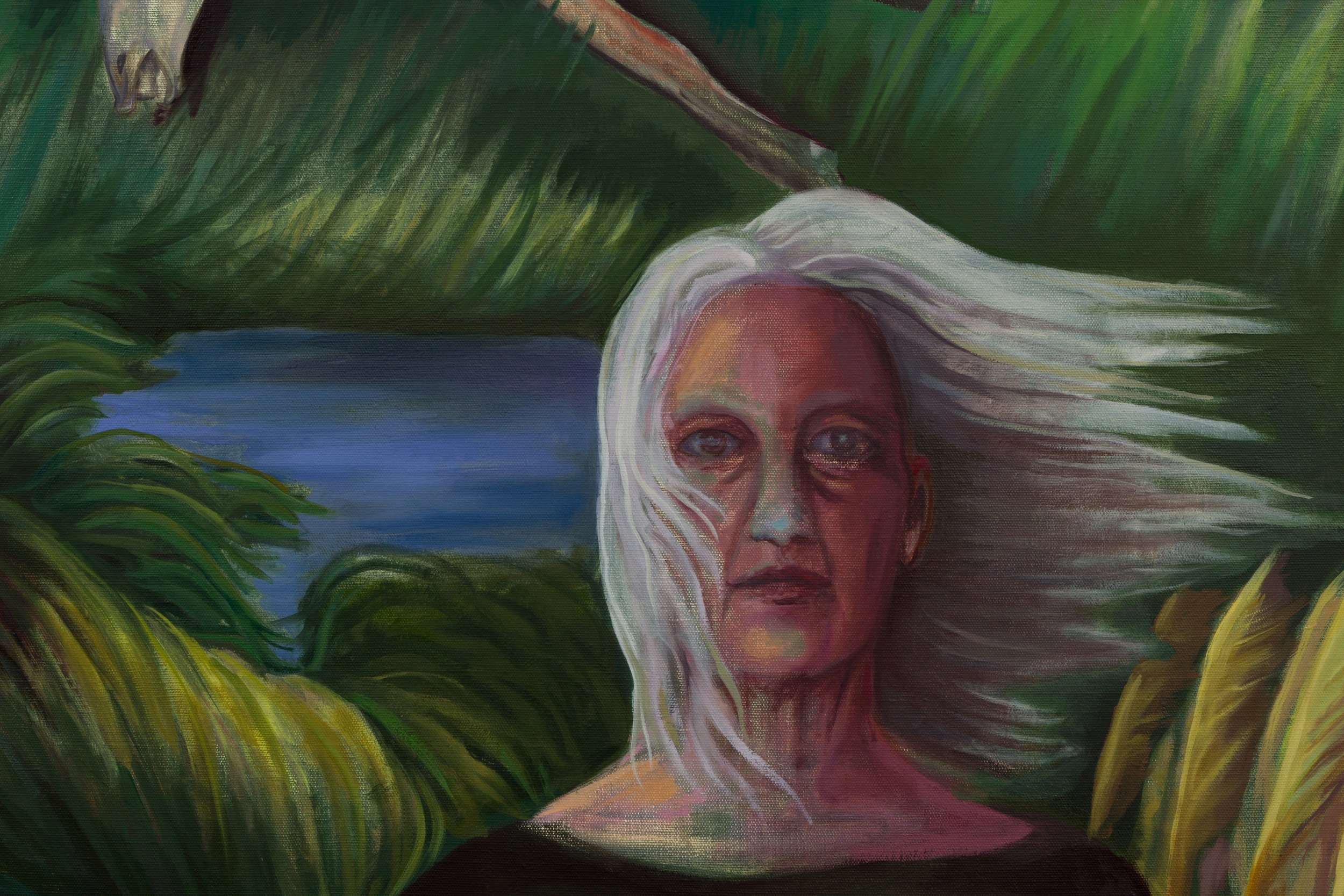
Gnashing Grasses, Nor’easter Passing. Oil on linen. 62” x 73”. 2026
I grew up in a small coastal town in Massachusetts in a house facing marshland. As a child, I would disappear into the mud for hours, while gnats bit at my arms and neck, pulling myself back out by grasping at reeds and grasses. A visceral space known first through my body before it was understood through language.
Numb Face, Tide Withdrawn. Oil on linen. 62” x 73”. 2025
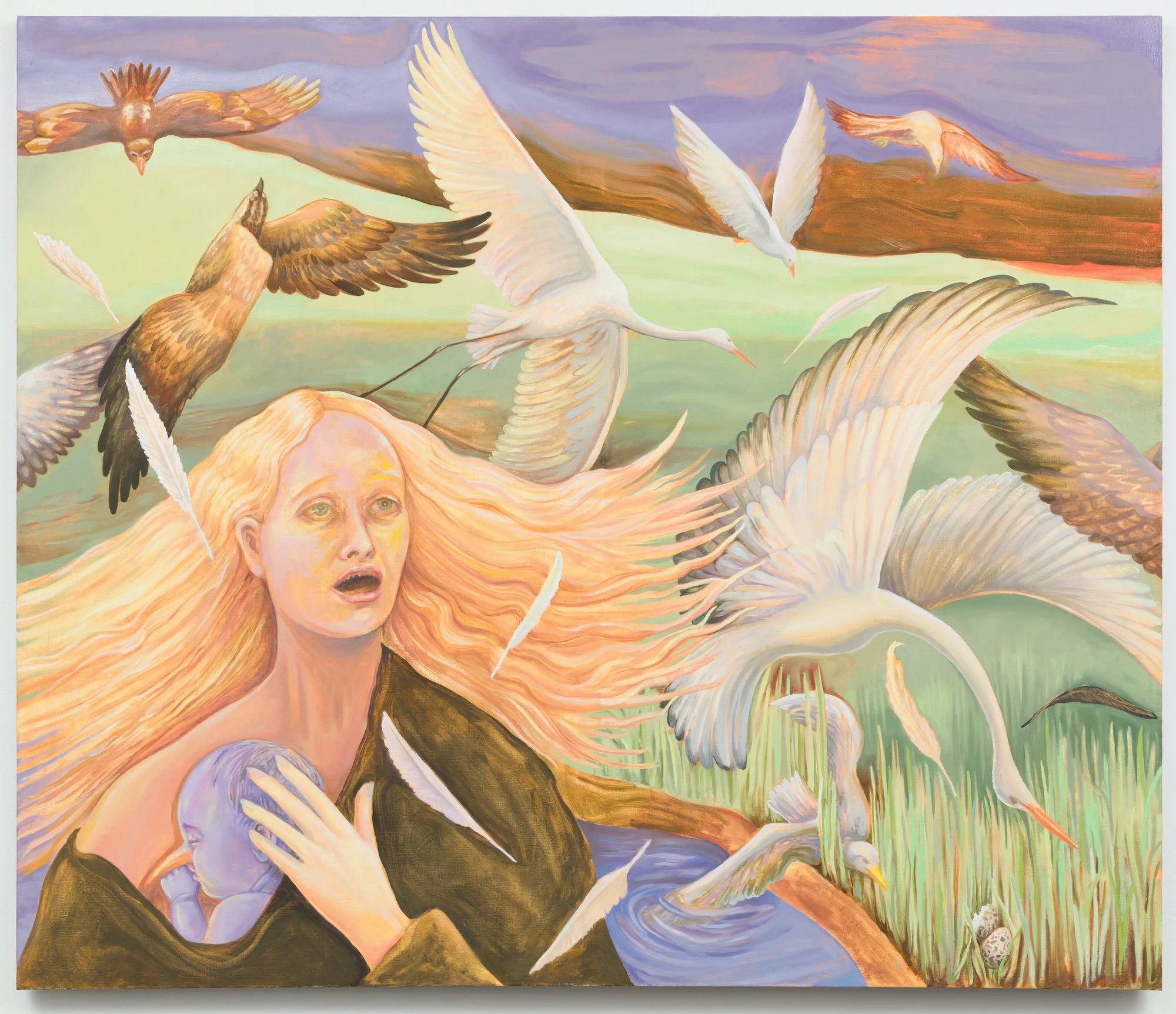
Bird Son. Oil on linen. 62” x 73”. 2025

Mud, Peat, Bone. Oil on Linen. 62” x 73”. 2025
As coastal ecosystems face erosion, sea level rise, and ecological collapse, I find myself returning to these environments. I am less interested in showing catastrophe than in sharing the strangeness, precarity, and intimacy of these landscapes.
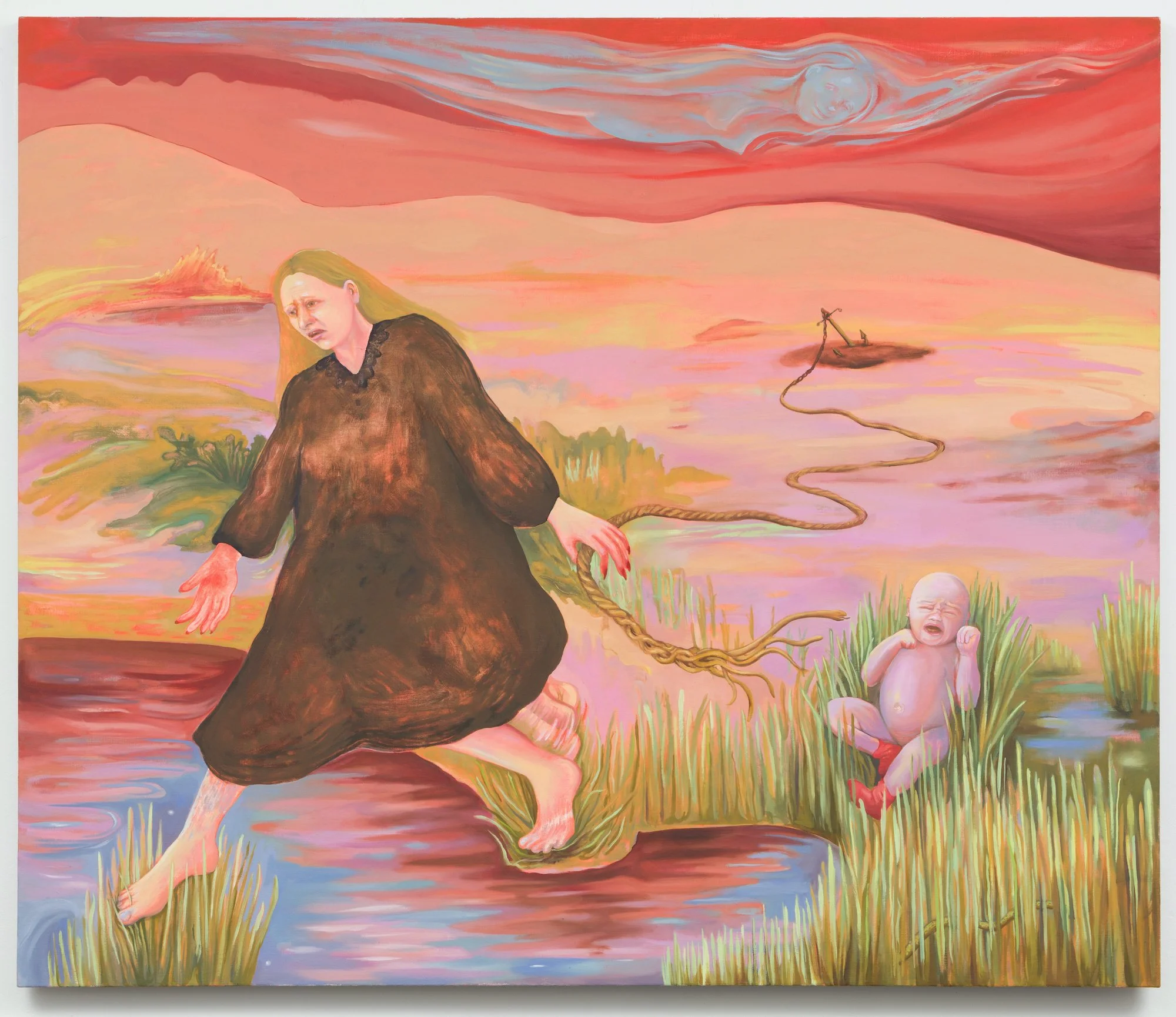
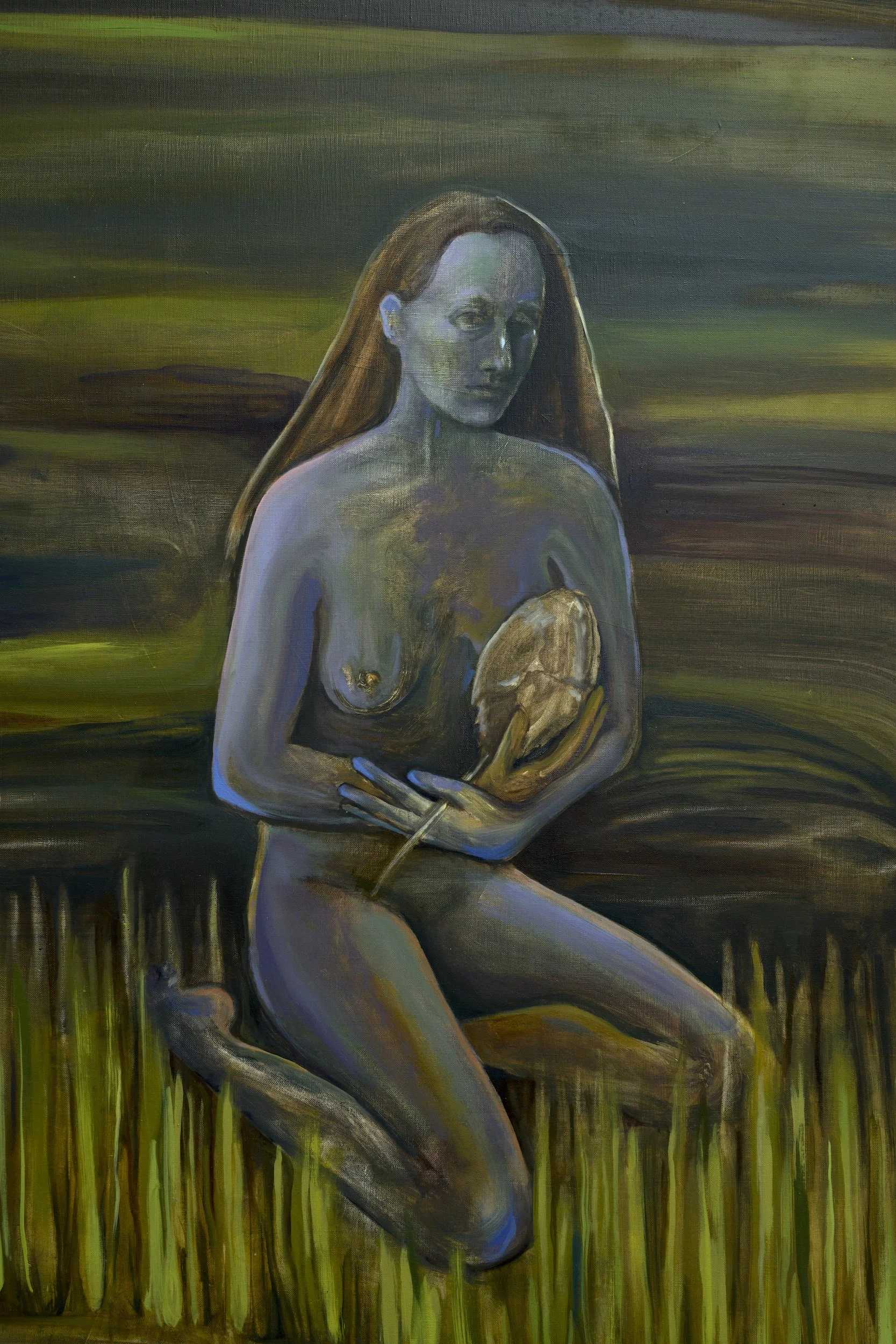
Within my paintings, female figures move through the landscape, performing actions that feel familiar and strange at once. Some figures appear to be from the past, others are contemporary. Clothing, nudity, gesture, and repetition make it difficult to locate them within a single temporality. Time folds inward. Histories collapse into one another. The marsh remains while the figures cycle through it.
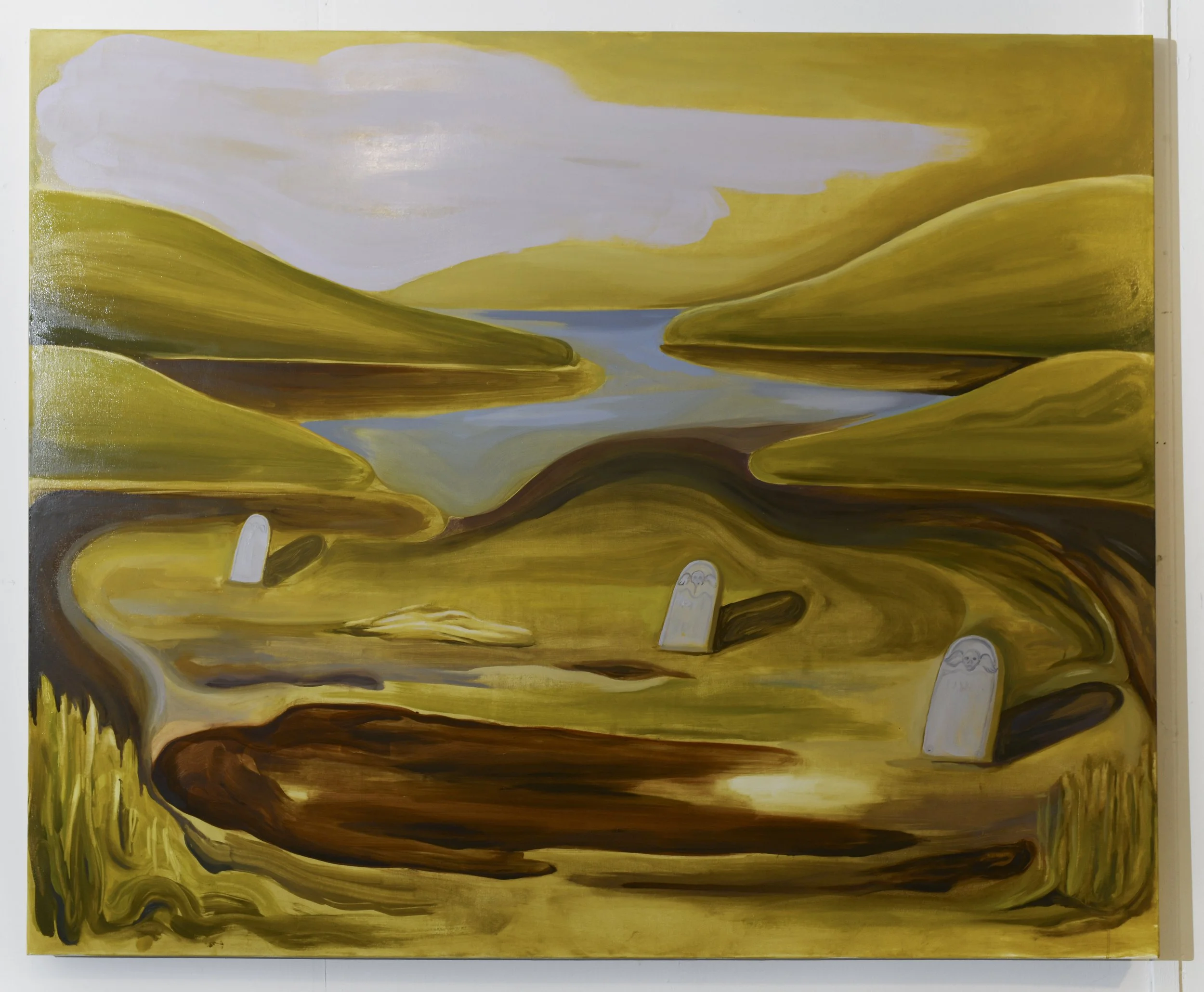
Low Tide. Oil on Canvas. 54" x 62". 2023
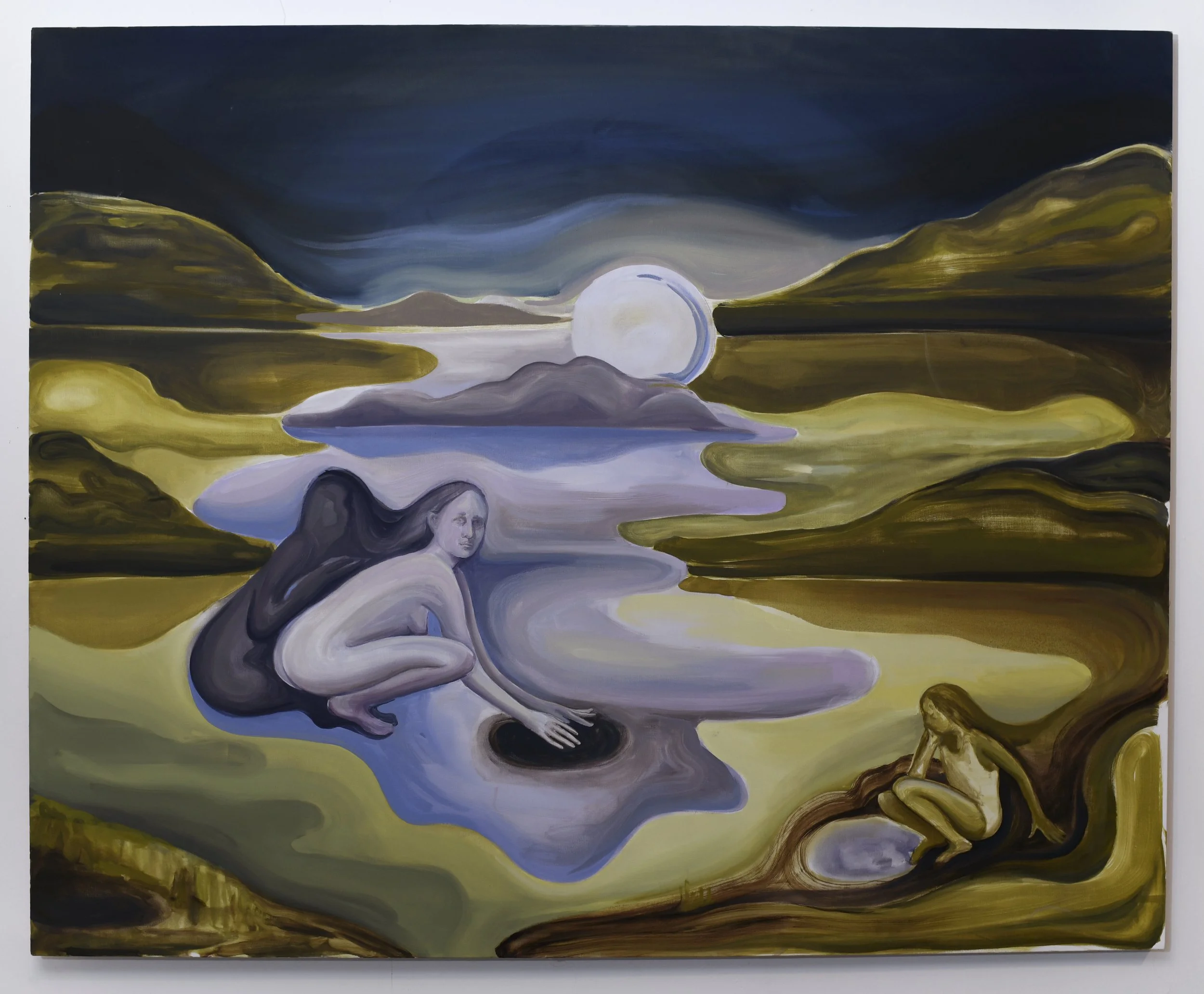
Tide Coming In. Oil on Canvas. 54" x 62". 2023
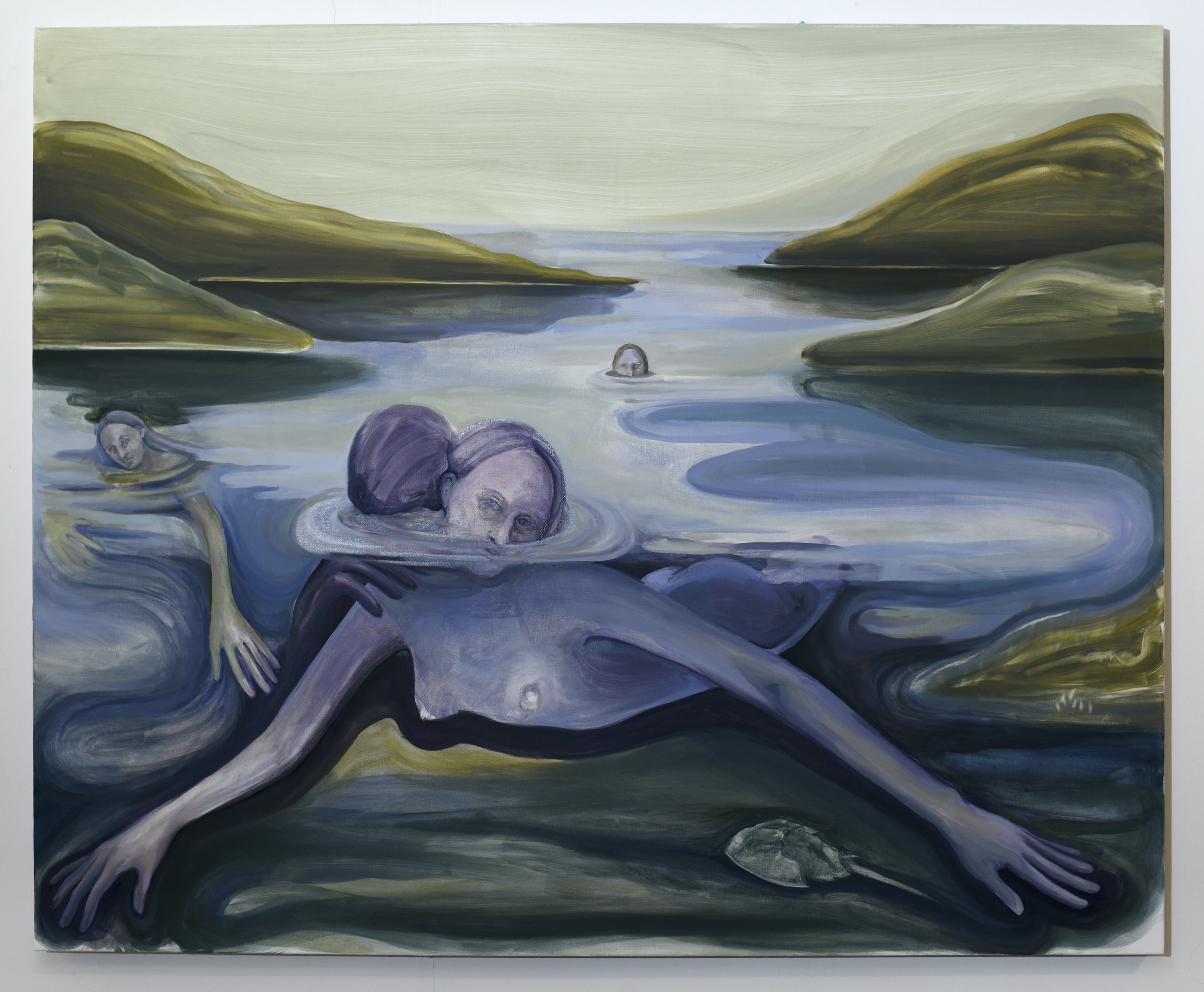
High Tide. Oil on Canvas. 54" x 62". 2023

Ebb Tide. Oil on Canvas. 52” x 64”. 2024
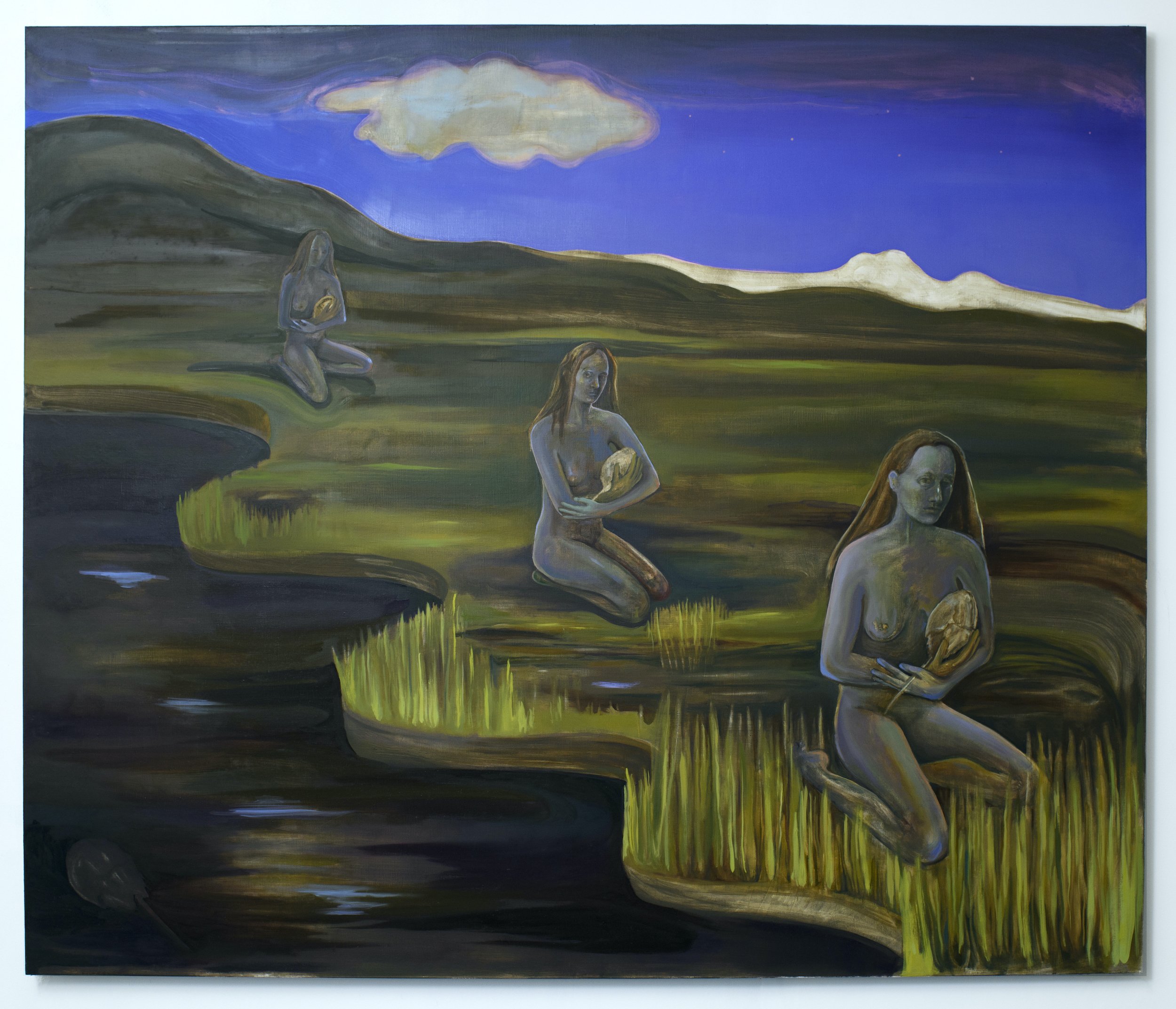
Mothering. Oil on linen. 62” x 73”. 2024
The narratives within these paintings are intentionally unresolved. I think of them less as illustrations of myth and more as spaces where myth might emerge. The landscape becomes the carrier of the story. Through repetition, the marsh develops its own internal logic, accumulating memory, grief, transformation, and possibility.
A marsh never seems to hold a fixed form; twice a day, it swells up and drains away. At high tide, it resembles a lake you could swim through, and at low tide, an exposed mud flat impossibly filled with bugs, scattered with reeds, shells, and the remains of washed ashore creatures. Neither land nor water, marshlands are shaped by cycles of flooding, erosion, decay, and renewal. Along the New England coast, marshes hold histories of colonial arrival, displacement, labor, and environmental change. Yet they remain resistant to permanence. Their boundaries shift. Their surfaces sink and reform. They refuse stability.